
CBSE Education
CBSE 2026-27 Curriculum Changes: New Syllabus, Assessment and What Students Need to Know
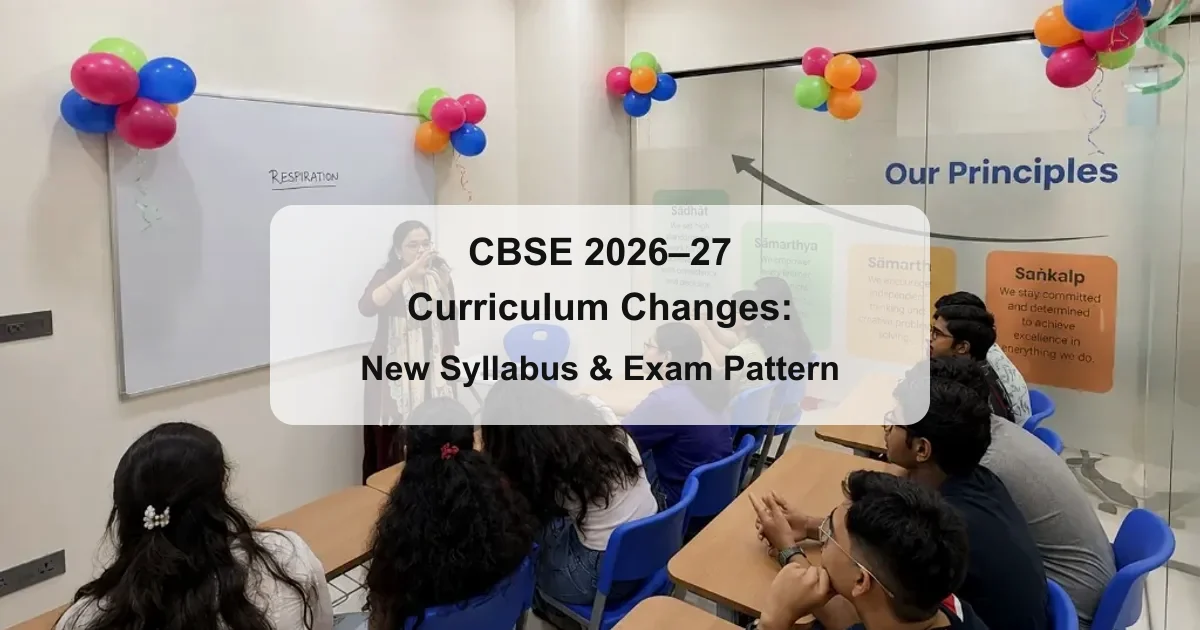
The CBSE curriculum for 2026–27 places greater attention on conceptual understanding, skill development, practical learning, and competency-based assessment. For students and parents, these updates may influence how subjects are taught, studied, and assessed. Understanding the latest curriculum framework can help students adapt their learning habits and prepare for academic requirements. From mathematics and technology to assessment and multidisciplinary learning, the updated approach reflects the changing needs of school education.
As students adjust to these changes, having the right academic support can make the learning process easier and more structured. A strong focus on concepts, regular practice, and individual attention can help students build confidence and stay prepared for their school assessments. For students looking for additional academic support, Catalyst Classes offers CBSE tuition in Hyderabad, providing structured learning, personalised guidance, and regular practice alongside regular classroom studies. Parents looking for the best CBSE course in Hyderabad can explore Catalyst Classes to help their children strengthen their concepts, improve their academic performance, and develop greater confidence in their studies.
What Is CBSE and Why Is It Important for Students?
CBSE provides a common academic framework for affiliated schools across India and abroad. Its curriculum focuses on structured learning, conceptual understanding, skill development, and preparation for higher education.
- A widely followed school curriculum
- Focus on conceptual learning
- Competency-based education
- Skill and vocational education
- Technology integration
- Structured assessment
- Opportunities for multidisciplinary learning
What Are the Advantages of the CBSE Curriculum?
- Concept-Based Learning — Students are encouraged to understand ideas rather than depend only on memorisation.
- Skill Development — The curriculum gives increasing attention to practical skills, vocational education, and future-ready learning.
- Structured Curriculum — CBSE provides a defined curriculum and academic framework for affiliated schools.
- Technology Awareness — Computational thinking, digital literacy, and AI-related learning are becoming more relevant in school education.
- Flexible Learning — The curriculum framework provides opportunities for students to explore different subjects and areas of interest, depending on the applicable class and scheme of studies.
What Are the Major CBSE 2026-27 Curriculum Changes?
The CBSE 2026-27 curriculum framework reflects a wider focus on competency-based and skill-oriented education. Students are encouraged to understand concepts and apply their knowledge in different situations rather than depending only on memorisation.
The changes also highlight areas such as critical thinking, problem-solving, digital awareness, and experiential learning. For parents, it is important to understand that the exact implementation of some changes may depend on the class, subject, and official guidelines applicable to the academic year. For the most accurate and updated information, students and parents should refer to the official CBSE 2026–27 curriculum page for class-wise curriculum, syllabus, and subject-related details.
Key CBSE Syllabus Changes Students Should Know
The CBSE 2026-27 syllabus changes are expected to encourage students to learn concepts in a more practical and connected way. The focus is not only on completing chapters but also on developing skills that students can use beyond the classroom.
- Changes in Class 9 Education — The Class 9 2026–27 scheme of studies includes several academic and skill-based learning areas. These include language subjects, Mathematics or Mathematics Advanced, Science or Science Advanced, Social Science, Vocational Education, Individuals in Society, Art Education, Physical Education and Well-being, along with CT & AI modules, according to the prescribed CBSE framework. Students may benefit from spending more time understanding the "why" behind a topic instead of simply remembering information. Regular practice, revision, and participation in classroom activities can therefore become more important.
- Mathematics May Focus More on Application — Mathematics is another area where students may notice a stronger focus on understanding and application. The broader competency-based approach encourages students to work with questions that involve reasoning, interpretation, and problem-solving, alongside understanding mathematical concepts. Some curriculum approaches use progressive learning, where students revisit and build on concepts as they move through different stages of education. Students and parents should refer to the applicable CBSE curriculum document for specific subject-level details. As students revisit a topic, they can gradually work with more advanced ideas. This approach can help connect earlier learning with new concepts.
- Social Science and Interdisciplinary Learning — Social Science includes subjects that help students understand society from different viewpoints. The newer approach encourages students to see connections between areas such as History, Geography, Political Science, and Economics. For example, a historical event can be studied along with its geographical, political, or economic impact. This type of learning can help students look at a topic from more than one perspective instead of studying each subject in isolation. The exact subject structure and curriculum requirements depend on the applicable CBSE scheme of studies.
- Greater Focus on Language Learning — Language education continues to be an important part of the broader school curriculum. The framework associated with NEP 2020 gives attention to multilingual learning and the use of Indian languages. However, the specific language options and requirements should be checked against the latest CBSE curriculum and the school's applicable academic structure. Parents should check the specific language requirements followed by their child's school and the latest official CBSE guidelines. Language choices and implementation can vary based on the applicable curriculum framework and school structure. The exact subject structure and curriculum requirements depend on the applicable CBSE scheme of studies.
- AI and Computational Thinking — Technology and digital skills are receiving greater attention in school education. CBSE has introduced a Computational Thinking and Artificial Intelligence framework for relevant stages of learning, while the Class 9 2026–27 scheme includes CT & AI modules with school-based assessment. The exact requirements depend on the applicable class and curriculum framework. The aim is to help students understand how technology works and how it can be used to solve problems. These skills can also encourage logical thinking and creativity, which are useful across many subjects.
- More Flexibility Through Multidisciplinary Learning — The broader education framework encourages students to explore different interests and make connections between learning areas. A multidisciplinary approach encourages connections between subjects instead of placing all learning into strict categories. This can help students understand that subjects are often connected. Mathematics can support science, technology can be linked with creative work, and social studies can connect with real-world issues. The exact subject choices available to students will depend on their school and the applicable CBSE framework.
What Is the CBSE 2026-27 Assessment Approach?
The CBSE 2026-27 assessment approach is linked to the wider focus on competency-based education. Students may need to demonstrate understanding, reasoning, and the ability to apply concepts, depending on their class and subject. Students may need to prepare for questions that test understanding, reasoning, and the ability to apply concepts.
Any CBSE exam pattern changes for 2026-27 should be understood through the official subject-wise syllabus and assessment guidelines applicable to the relevant academic session. Students should not depend only on memorising textbook answers. Instead, they should practise different question types and understand how concepts can be used in unfamiliar situations.
Assessment may also include a wider mix of classroom activities, projects, assignments, practical work, and examinations, depending on the class and subject. The specific weightage and assessment requirements should be checked in the official CBSE subject-wise guidelines. This approach can give students more opportunities to demonstrate what they have learned.
How Will the CBSE 2026-27 Curriculum Affect Students?
The CBSE curriculum 2026-27 may require students to change the way they approach their studies. Reading a chapter once and memorising answers may not be enough for subjects that involve application and reasoning.
Students can prepare by building strong concepts, practising questions regularly, reviewing mistakes, and connecting lessons with real-life examples. They should also develop skills such as critical thinking, communication, problem-solving, and digital awareness. Parents can support this process by encouraging consistent study habits rather than focusing only on marks. A balanced routine that includes schoolwork, revision, practice, and adequate rest can help students manage academic demands.
How Should Students Prepare for the CBSE 2026-27 Curriculum?
Understanding the CBSE 2026-27 new syllabus changes is only the first step. Students should also adjust their daily learning habits to match the new approach.
- Concepts — Focus on understanding the topic before trying to memorise an answer.
- Practice — Solve different types of questions instead of repeating only familiar examples.
- Revision — Review important concepts regularly to improve retention.
- Application — Try to connect classroom learning with practical and real-world situations.
- Skills — Develop reasoning, problem-solving, communication, and digital skills alongside subject knowledge.
Students who need additional academic support can also consider structured CBSE coaching in Hyderabad, especially when they need help with difficult subjects or regular practice.
What Should Parents Look for in CBSE Coaching?
Parents searching for the best CBSE course in Hyderabad should first understand what their child actually needs. The right academic support should match the student's class level, learning pace, subject requirements, and school schedule.
Before choosing a coaching or tuition centre, parents can consider:
- Faculty: Are teachers able to explain concepts clearly?
- Batches: Is the class size suitable for meaningful interaction?
- Practice: Are students given regular questions and assignments?
- Assessment: Are tests conducted to track learning and identify gaps?
- Support: Can students ask questions and receive help with difficult topics?
- Progress: Are parents informed about the student's academic development?
Parents looking for the best tuition classes in Hyderabad should also consider factors such as location, class timings, teaching approach, and the overall learning environment rather than relying only on advertisements or rankings.
Choosing CBSE Tuition Based on Your Location
Location can be an important practical factor when selecting academic support. A centre that is convenient to reach may make it easier for students to attend classes regularly while maintaining enough time for schoolwork and self-study. Catalyst Classes provides structured CBSE academic support for students in Hyderabad, with learning centres in Manikonda and Kondapur. Parents can choose the centre that is convenient for their location and explore the available CBSE programs, teaching approach, and class schedules.
CBSE Tuition in Manikonda
Families looking for CBSE tuition in Manikonda can consider Catalyst Classes for structured academic support, concept-based learning, regular practice, and student-focused guidance. Parents can visit the Catalyst Classes Manikonda centre to learn more about the available CBSE programs and class schedules.
CBSE Tuition in Kondapur
For families searching for CBSE tuition in Kondapur, Catalyst Classes provides academic support for students looking to strengthen their concepts and improve their subject understanding. Parents can visit the Catalyst Classes Kondapur centre to learn more about the available CBSE programs and class schedules.
Frequently Asked Questions About CBSE 2026-27 Changes
Conclusion
The CBSE 2026–27 curriculum changes reflect a broader focus on conceptual learning, practical application, skill development, and competency-based assessment. Students can prepare for this approach by understanding their subjects, practising regularly, revising concepts, and developing problem-solving skills alongside academic knowledge.
Parents looking for additional academic support can explore Catalyst Classes, with learning centres in Manikonda and Kondapur, Hyderabad. When choosing a CBSE program, families should consider the teaching approach, faculty, course structure, assessment methods, location, and the individual learning needs of the student.